Quotex Trading Platform in India: A Complete Overview
Quotex is a quick trading and fixed-time trading platform that has built a visible presence among Indian retail traders, largely through its low entry deposit and Hindi-friendly interface. This overview walks through how the platform works, what tools it offers, and where the serious caveats sit for anyone in India considering it in 2026. If you want to see the interface first, you can Open a Quotex Account → and explore the demo before committing funds.
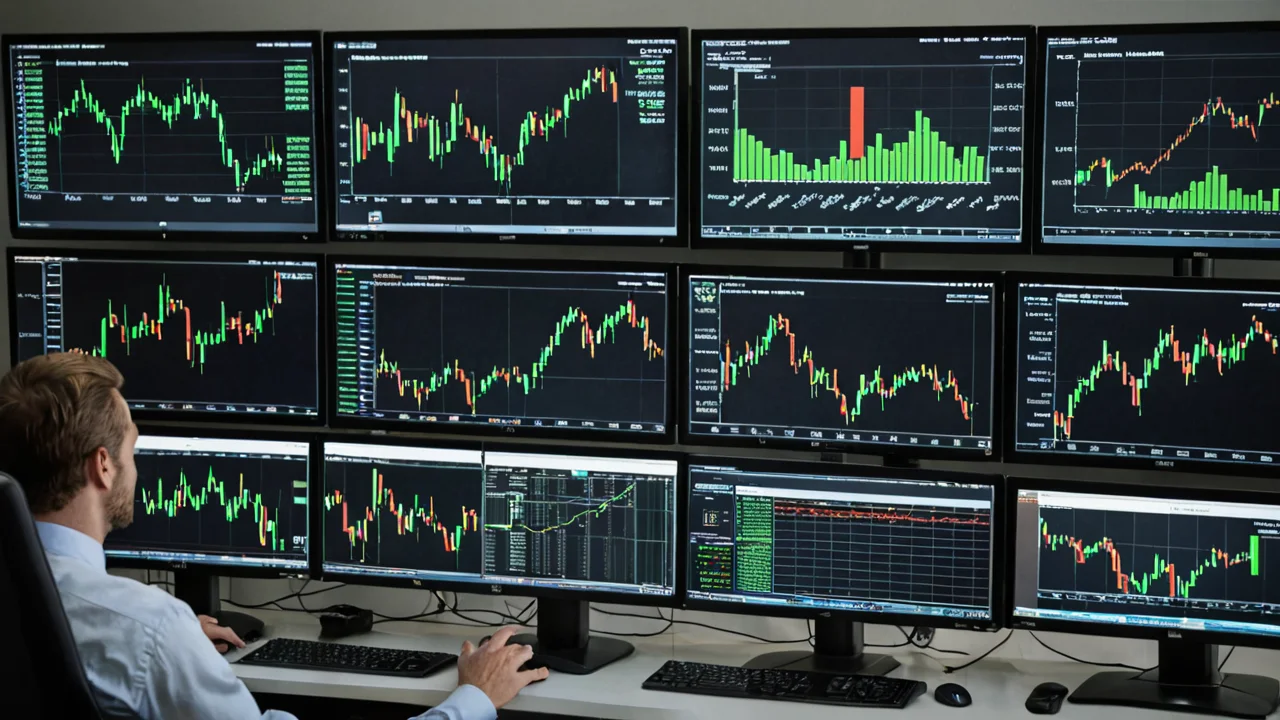

What the Quotex Trading Platform Actually Is
Quotex is not a stock broker, and it is not a forex broker in the traditional sense. It is a fixed-time trading platform where you predict whether the price of an asset will be higher or lower at the end of a set expiry, which can run from roughly 60 seconds up to several hours. Your result is binary: the contract pays out, or it expires worthless.
The asset list covers forex pairs, indices, commodities, individual stocks and cryptocurrencies. These are presented as digital fixed-time contracts rather than spot or CFD margin trades, which matters because it changes how risk is calculated. You are not holding a position with a stop loss; you are buying a contract with a defined outcome.
The core mechanic is simple to learn but unforgiving on timing. There is no partial close, no trailing stop, and no way to reduce a losing position once the contract is live.
- Expiries from about 60 seconds to several hours
- Assets across forex, indices, commodities, stocks and crypto
- Payout percentages that vary by asset, volatility and time of day
- Weekend over-the-counter (OTC) trading using synthetic pricing rather than exchange data
Key Takeaway: Quotex is a fixed-time contract platform, not a margin broker. The risk profile is different from CFD or spot trading, and losses are capped at the amount you stake per contract.
Conditions in numbers
| Minimum deposit | $10 |
|---|---|
| Minimum trade | $1 |
| Maximum payout | up to 98% |
Conditions declared by the broker; checked against public sources · 2026-10-12 · source
Trade on a smoother platform
Faster charts, cleaner UI, fewer crashes.
Account Setup and the Quotex Demo
Getting started is deliberately frictionless. Reviews of the platform consistently note a minimum deposit of 10 USD, often equated to roughly 800 to 900 INR, with a minimum trade size of 1 USD. That low floor is a big part of why the platform spreads quickly among first-time traders in India.
The demo account is the part worth paying attention to. It typically comes loaded with around 10,000 units of virtual balance, and one Quotex-branded blog even promotes trading on a demo account without registration, with optional sign-up for full features. For a beginner, this is the only sensible place to start, because it lets you test whether the higher/lower mechanic suits your temperament before real rupees are involved.
A demo account does not replicate real execution conditions. Slippage, payout adjustments and the psychological weight of live money are absent, so demo results should never be read as a forecast of live performance.
- Free demo with virtual balance for practice
- Low minimum deposit and low minimum trade size
- Hindi and English language support
- INR (Indian rupee) support and a mobile app
Key Takeaway: Use the Quotex demo to learn the interface and expiry mechanics. Treat any demo profit as a learning signal, not as evidence the strategy will work with real capital.
Calculate the return on a trade
Profit $0
Returned in total $0
Lost if the trade fails $0
The calculator uses the payout the broker declares; the actual percentage depends on the asset and the moment of entry.
Open in minutes
No paperwork — email + password is enough.
Tools, Features and Platform Access
Quotex runs on its own proprietary platform, accessible through the web and through mobile apps. Reviews are consistent on one point: there is no MT4, MT5 or cTrader integration. If you are used to MetaTrader, this is a genuine adjustment, because you cannot port your existing indicators, expert advisors or templates across.
What the platform does include is a set of built-in features aimed at engagement as much as analysis. Indicators are available on charts, and the platform layers on leaderboards, tournaments and copy trading. Support is listed as 24/7 through live chat, email and ticket systems.
The Google Play listing for the "Quotex trading platform | QxBroker" app shows an official support email at app@quotex.io and a phone contact with a Lithuanian country code. That detail is worth noting, because it points to where the operation is anchored rather than where it is marketed.
Copy trading and tournaments are engagement features, not risk management tools. They can encourage more frequent trading, which on a fixed-time platform usually means faster losses for inexperienced users.
- Proprietary web and mobile platform, no third-party terminal support
- Chart indicators, leaderboards, tournaments and copy trading
- 24/7 support via live chat, email and tickets
- Mobile app available through official app stores
Key Takeaway: The toolset is built for accessibility and engagement. Traders coming from MT4 or MT5 should expect a closed ecosystem with no plugin support.
Words worth pinning down
- Quick trading
- A contract with a fixed expiry chosen before entry; the result is settled at that moment, not when the trader closes it.
- Expiry
- The moment a contract is settled. It is fixed when the trade is opened and cannot be moved afterwards.
- Demo account
- A funded practice account with virtual money. Prices are live, the balance is not real.
Built for retail traders
Mobile-first interface, low learning curve.
Payouts, Costs and How Pricing Works
On a fixed-time platform, cost is not expressed as a spread or a commission in the CFD sense. It is embedded in the payout percentage. Several sources state that maximum payout can reach around 95 to 98% on certain contracts and under specific conditions, while other reviews quote more typical ranges in the 80 to 95% band.
That gap matters. Payout settings on binary platforms are dynamic. They shift with the asset, with volatility, and with the time of day, and they can change without notice. A single fixed number cannot be guaranteed for 2026, and any review that promises one is oversimplifying.
The house edge lives in the payout structure. If a contract pays 85% on a win but costs 100% on a loss, you need a win rate meaningfully above 50% just to break even. That math is the single most important thing to understand before trading.
- Payouts vary by asset, expiry and market conditions
- Costs are embedded in payout percentages, not charged as visible spreads
- No auditable public fee table is available from independent sources
- Deposit and withdrawal methods for India are not fully documented in verified sources
Key Takeaway: There is no transparent, independently verified fee schedule. Payout percentages are the real cost, and they move. Budget for that uncertainty.
Words worth pinning down
- Payout percentage
- The share of the stake returned as profit on a winning contract, stated per asset before entry.
- Stake
- The amount committed to one contract. On a loss it is lost in full.
- Break-even rate
- The share of winning trades needed to end flat at a given payout percentage.
Better local methods on quotex
Faster withdrawals than offshore alternatives.
Regulation and Legal Status for Indian Traders
This is the section that deserves the most attention, and it is where marketing copy and regulatory reality diverge sharply.
Multiple independent review sites state that Quotex is not regulated by any government financial authority. A specialised regulation-focused review in 2026 concluded that Quotex holds no licence from the FCA, CySEC, ASIC or BSEC, and noted that its operating entity could not be independently verified from primary sources. Several sources report a link to a corporate entity named Awesomo Ltd, located in Victoria, Seychelles, but at least one 2026 assessment says this could not be confirmed from accessible primary records.
Older material references an IFMRRC licence number, "TSRF RU 0395 AA V0161." That is an IFMRRC certification, not a government regulator authorisation, and more recent analyses uniformly classify Quotex as unregulated.
For India specifically, at least one detailed review states plainly that Quotex holds no SEBI licence and is not registered with SEBI, and that its binary and fixed-time options product falls into a category Indian regulators have acted against. The same assessment notes that Indian residents may only trade forex via RBI and SEBI-approved venues under FEMA, and therefore classifies Quotex as legally unauthorised for Indian retail use.
There is a direct contradiction in the sources. Some India-targeted sites describe Quotex as "legal for Indian traders but not regulated by SEBI," while regulatory-oriented assessments stress unauthorised status under SEBI and FEMA. Do not treat the "legal" framing as settled.
- No SEBI registration and no RBI-recognised protection
- No tier-1 licence from any major government regulator
- IFMRRC certification is not a government licence
- Conflicting interpretations of legality for Indian residents
Key Takeaway: For Indian users, Quotex offers no SEBI or RBI-recognised regulatory protection. Independent reviewers and broker-alert services consistently rate it high-risk or unauthorised.
The vocabulary of this part
- Offshore licence
- A licence issued outside the trader's country; it binds the broker to that register, not to local law.
- Segregated funds
- Client money held in accounts separate from the company's own money.
- Register entry
- The record a regulator publishes for a licensed company; its absence is itself a fact.
Trade on a partner-friendly platform
International compliance, transparent operations.
Risk Warnings and Independent Assessments
Broker-check and risk-assessment services have been blunt. Several assign Quotex very low regulation and safety scores, with at least one giving a regulation score of 1 out of 10 and advising that it is not recommended for risk-sensitive investors. A 2026 binary-broker alert notes that Quotex holds no tier-1 licence anywhere and highlights that retail quick trading are banned in several major jurisdictions.
One risk profile emphasises that Quotex operates without formal regulatory oversight, has no valid forex trading licence, and is based in a region flagged for heightened due diligence, concluding that its regulatory and risk-control ratings are critically low.
There is also a structural concern that goes beyond licensing. Quotex offers OTC trading on weekends using synthetic pricing rather than underlying exchange data. When pricing is generated internally and there is no external venue to match against, users are fully dependent on the platform's own price feed. That raises legitimate questions about price integrity, conflict of interest and fairness of execution.
Unregulated status plus internally generated pricing is a combination that deserves scepticism. Neither factor alone is disqualifying, but together they remove the external checks that regulated venues provide.
- Very low regulation and safety scores from independent checkers
- No valid forex or derivatives trading licence
- OTC synthetic pricing on weekends with no external reference
- Execution model not documented in primary sources
Key Takeaway: Independent risk assessments are consistently negative. The absence of oversight, combined with internal pricing, means there is no external party protecting your interests.
The vocabulary of this part
- Dispute body
- The forum named in the client agreement for complaints the company does not resolve.
- Underlying asset
- The instrument a contract is written on — a currency pair, an index, a commodity or a crypto asset.
- Spread
- The gap between buying and selling price quoted at the same moment.
Avoid the unverified
Trade only on platforms with track record.
Practical Considerations Before You Deposit
If you decide to explore the platform anyway, treat it as speculative capital at risk, not as an investment. The minimum deposit of 10 USD keeps the entry cost low, but low entry cost is not the same as low risk, and it can encourage over-trading.
Start on the demo. Learn how expiries behave around news events and market opens. Understand that a 60-second contract on a volatile asset is closer to a coin flip with a built-in edge against you than it is to a trade with an analysable setup.
Withdrawal methods, processing times and any associated fees for Indian bank accounts are not backed by public, dated fee schedules or independent transaction tests. Reviews cite typical times and describe "no fees," but these are anecdotal. Payment options on platforms like this change frequently and often depend on third-party processors, so verify current terms directly before relying on them.
Never deposit money you cannot afford to lose entirely. With no regulatory recourse, no deposit protection scheme and no ombudsman to appeal to, a disputed withdrawal has no formal resolution path.
- Verify current deposit and withdrawal terms yourself
- Keep position sizes small relative to total capital
- Avoid chasing losses with larger contracts
- Understand there is no regulatory recourse in a dispute
Key Takeaway: Treat any funds on the platform as fully at risk. There is no compensation scheme and no regulator to escalate a complaint to.
Learn more about sign up in our sign up guide. Learn more about login in our login guide.
Terms used in this section
- Minimum deposit
- The smallest amount the platform accepts to open a live account.
- Processing time
- How long the platform states a transfer takes once it is approved; the payment provider adds its own time.
- Verification
- An identity check the platform runs before the first withdrawal, not before the first deposit.
Side-by-side comparison
Decide after you try both platforms.
Frequently Asked Questions
-
Is Quotex regulated in India?
No. Multiple independent reviews state that Quotex is not regulated by any government financial authority, and at least one India-focused assessment confirms it holds no SEBI licence and is not registered with SEBI. It also holds no tier-1 licence from major regulators. Older references to an IFMRRC certificate do not constitute government regulation.
-
What is the minimum deposit on the Quotex trading platform?
Reviews consistently report a minimum deposit of 10 USD, often equated to roughly 800 to 900 INR, with a minimum trade size of 1 USD. These figures come from review sources rather than a verified platform fee schedule, so confirm current terms directly.
-
Does Quotex offer a demo account?
Yes. The platform is commonly reported to include a free demo account with around 10,000 units of virtual balance. One Quotex-branded blog promotes demo trading without registration, with optional sign-up for full features. The demo is the sensible starting point before any real deposit.
-
Can Indian residents legally trade on Quotex?
The sources conflict. Some India-targeted sites describe it as legal but not SEBI-regulated, while regulatory-oriented assessments state that Indian residents may only trade forex via RBI and SEBI-approved venues under FEMA, and classify Quotex as legally unauthorised for Indian retail use. Treat the legality question as unresolved and high-risk.
-
Does Quotex support MT4 or MT5?
No. Reviews are consistent that Quotex runs only on its own proprietary platform, accessible through the web and mobile apps, with no MT4, MT5 or cTrader integration. Existing indicators and expert advisors cannot be ported across.
-
What are the maximum payouts on Quotex?
Several sources state maximum payout can reach around 95 to 98% on certain contracts under specific conditions, while other reviews quote more typical ranges of 80 to 95%. Payouts are dynamic and vary by asset, volatility and time of day, so no single fixed figure can be guaranteed.
-
How do I open a Quotex account?
You can Open a Quotex Account through the platform's registration flow, which supports Hindi and English along with INR. Given the regulatory warnings above, start with the demo and treat any live deposit as fully at-risk speculative capital.
Short answers
- Is Quotex regulated in India?
- No
- What is the minimum deposit on the Quotex trading platform?
- Reviews consistently report a minimum deposit of 10 USD, often equated to roughly 800 to 900 INR, with a…
- Does Quotex offer a demo account?
- Yes
- Can Indian residents legally trade on Quotex?
- The sources conflict
- Does Quotex support MT4 or MT5?
- No
- What are the maximum payouts on Quotex?
- Several sources state maximum payout can reach around 95 to 98% on certain contracts under specific…